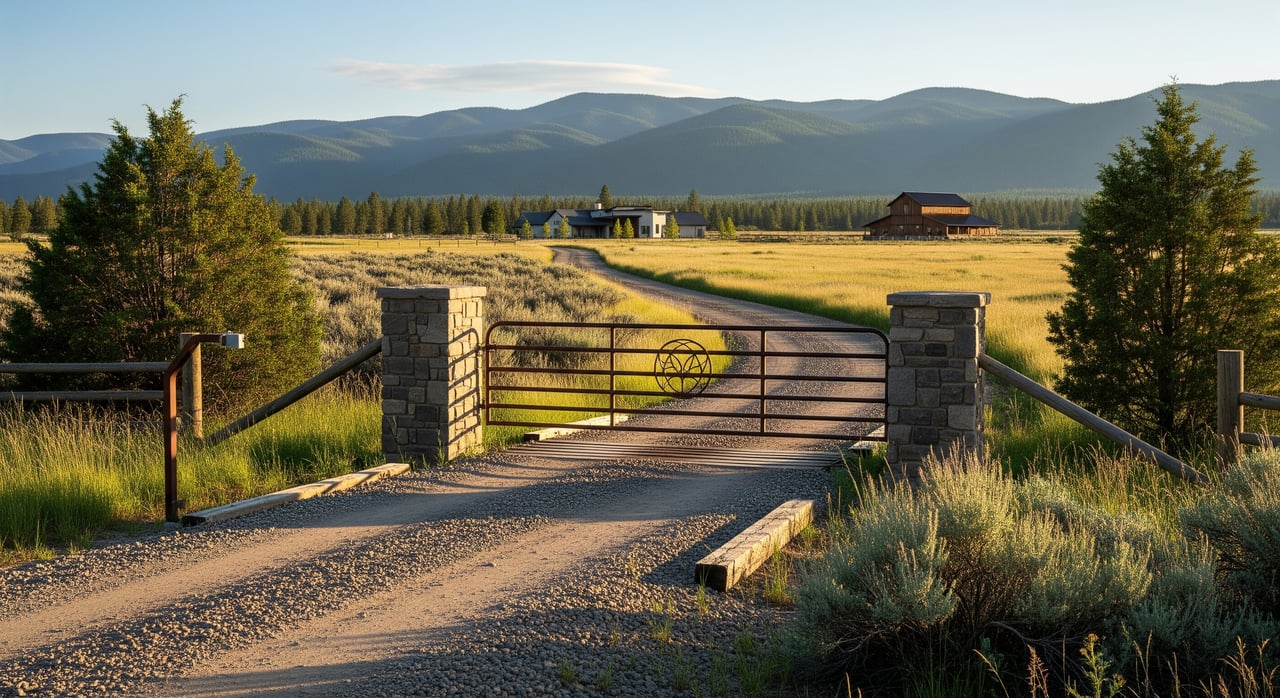
Buying land around Council can feel simple until you ask one key question: how do you actually get to it year‑round? In rural Idaho, access can make or break financing, insurance, permits, and resale. You want clarity before you invest, not surprises after closing. In this guide, you’ll learn the basics of legal and physical access, the easements you’re most likely to see, how to confirm what you have, and the common red flags near Council. Let’s dive in.
Legal vs. physical access
Legal access is your recorded right to reach a public road. It shows up in deeds, plats, or separate easement documents, and title companies look for it before they insure a sale. Physical access is the real-world road or driveway you can actually drive, in the conditions you expect.
Both matter. A parcel can have a recorded easement but no drivable road, especially after winter or on steep terrain. Lenders, insurers, and county reviewers often expect both legal and practical access to be clear and reliable.
In the Council area, access can involve county‑maintained roads, private shared roads, or seasonal routes over federal lands. Snow, grade, and maintenance budgets affect what is truly usable.
Common easement types you’ll see
Express easement
This is the most straightforward option. It is written and recorded as part of a deed, plat, or a separate agreement. Look for details like width, allowed uses, who maintains the road, gate rules, and whether it is exclusive or shared. These are preferred for financing and resale.
Easement by necessity
This can arise when a parcel is landlocked and needs access to be usable. It often ties back to how the land was originally divided and typically requires court confirmation. Plan for time and legal guidance if this is your path.
Prescriptive easement
This may be claimed after long‑term use that meets Idaho’s legal standards for being open, notorious, continuous, and adverse. Because the specifics depend on Idaho law and facts on the ground, you should consult a real estate attorney and your title company to evaluate any prescriptive claims.
Implied easement
Sometimes access can be inferred from the circumstances when land was split, especially if a prior route was obvious and needed for use. These can be complex to prove and may require legal review.
Dedicated public right‑of‑way
When a road is dedicated and accepted as a county public road, county rules and maintenance apply. Converting a private road to a public county road requires a formal process and construction standards that vary by county.
Utility easements
These allow power, communications, pipelines, or maintenance crews to cross property. They are separate from access easements and often need their own recorded documents.
How to confirm access for Council acreage
Use a layered approach. You want a paper trail and on‑the‑ground truth.
- Search public records
- Pull the deed for your parcel and adjacent parcels at the Adams County Recorder. Look for express easements, plats, or road dedications.
- Check parcel maps through the county assessor or GIS to see right‑of‑way overlays, subdivision plats, and any covenants.
- Collect any recorded road maintenance agreements.
- Order title work
- Ask a title company for a preliminary title report. Review easements, exceptions, and any gaps in access.
- Discuss title insurance endorsements that address legal access or lack‑of‑access risks.
- Get a survey
- Hire a surveyor for a boundary or ALTA/NSPS survey. Confirm exact easement locations, widths, and any encroachments.
- Have the surveyor locate fences, gates, and improvements relative to rights‑of‑way.
- Verify physical access
- Drive the route in more than one season if possible. Note grade, surface, runoff, and any gates. Test 2WD vs. 4WD and consider winter conditions.
- Contact Adams County Road & Bridge or County Commissioners to confirm which roads are county‑maintained and whether any approvals are needed for improvements.
- If any portion crosses federal land, contact the local BLM or Forest Service ranger district to confirm motorized use, seasonal closures, and travel‑management rules.
- Confirm utilities, septic, and wells
- Ask local utility providers and the county planning and health departments about any required utility easements and on‑site system permits.
- Verify that utility routes are recorded or that service providers will accept your proposed alignment.
- Get maintenance in writing
- If multiple owners share a private road, secure a written road maintenance agreement. Spell out cost‑sharing, plowing, grading, and how to handle disputes.
- Addressing and emergency services
- Confirm your E‑911 address and whether the current route allows emergency vehicle access under typical conditions. Speak with county emergency management or dispatch.
- When access is unclear
- Bring in a real estate attorney familiar with Idaho rural land. They can evaluate implied or prescriptive claims, draft or amend easements, and advise on quiet‑title or other remedies.
Local issues to watch near Council
- Landlocked or “paper” access only. A recorded easement without a usable road can derail lending and insurance. Lenders may want proof of practical access or a maintenance plan.
- Seasonal federal routes. Many BLM or Forest Service roads are not maintained year‑round and may close for weather or wildlife. Improvements can require permits and compliance with travel plans.
- Vague easement language. Descriptions like “along the old road” often need a survey or court interpretation.
- Shared private roads. Absentee owners and differing standards can cause conflict. Written, enforceable agreements reduce friction.
- Gates and livestock. Gate use should follow any recorded easement terms and local emergency access practices. Lockboxes may be required for emergency responders.
- Winter access and plowing. Not all roads are plowed by the county. Private agreements should define who plows and when.
- Encroachments and narrowing. Fences, vegetation, or structures may encroach on easements. Surveys help identify and resolve issues.
- Historic use disputes. Longstanding informal use can lead to prescriptive claims that affect title.
- Utility corridors. Power and broadband often need separate easements from the road access easement. Plan early so trenching or pole placement is approved.
- Wildfire and emergency egress. Access routes should allow for evacuation and fire/EMS vehicles. Local fire guidance may include minimum widths, turnarounds, and clearances.
Improving and protecting your access
- Clarify the route. If an easement’s location is vague, work with neighbors and a surveyor to record a clear legal description.
- Record amendments where needed. If terms are outdated, negotiate an amended easement with maintenance, gate rules, and utility rights spelled out.
- Upgrade the road. Consider grading, gravel, drainage, or culverts, subject to county or federal approvals if applicable. Document work and cost‑share per your agreement.
- Maintain year‑round usability. Plan for snow removal, spring runoff, and dust control. Track expenses for transparency among owners.
- Coordinate with agencies. If your route touches federal or county right‑of‑way, request current standards before you build or improve.
- Protect title. Ask your title company about endorsements that address access and use your survey to avoid future disputes.
Costs and timelines to expect
Budget will vary by parcel size, terrain, and the complexity of title. Typical categories include:
- Title work and title insurance premiums
- Survey costs, which can be higher on large or rugged acreage
- Attorney fees for easement drafting, review, or quiet‑title actions
- Recording fees for new or amended documents
- Road improvements, culverts, and drainage work
- Possible permitting and mitigation when crossing federal or state lands
Allow time for coordination with neighbors and agencies. County road acceptance or federal approvals can take longer and include specific construction standards.
Buyer checklist for Council‑area acreage
Before you write an offer
- Request a preliminary title report and read every easement and exception.
- Order a survey that shows easement locations and any encroachments.
- Drive the access route in different weather if possible; take photos and notes.
- Confirm county maintenance status and any approvals needed for improvements.
- Ask about title insurance endorsements that cover access concerns.
- Verify utility service paths and any separate utility easements.
- If access is via a private road, request a written road maintenance agreement and recent maintenance invoices.
During contract and closing
- Include contingencies tied to clear title, survey, and easement confirmation.
- Consider escrow holdbacks or seller remedies if issues surface late.
- Record any new easements or maintenance agreements at closing.
Seller checklist to prepare your listing
- Gather your deed, plats, recorded easements, and any covenants.
- Provide buyers with a copy of any road maintenance agreement and recent cost history.
- If you have a survey, share it. If not, consider authorizing one to speed up diligence.
- Disclose any gates, seasonal conditions, or shared access practices you know about.
Remedies when disputes arise
- Start with neighbor negotiation or mediation. Many road and cost issues resolve with communication.
- Record a clarified or amended easement if all parties consent.
- Consider a quiet‑title action to confirm or extinguish contested rights when necessary.
- Seek injunctions or damages if trespass or obstruction occurs.
- Explore county processes for road dedication or acceptance, understanding these can be time‑intensive and require standards.
When to bring in local pros
You will move faster and with fewer surprises if you involve the right experts early:
- Title company for reports, endorsements, and guidance on recorded exceptions
- Licensed surveyor for precise mapping of easements, fences, and encroachments
- Real estate attorney for implied, prescriptive, or quiet‑title issues and document drafting
- Adams County Recorder, Assessor/GIS, and Road & Bridge for records and road status
- County planning and health departments for permits and on‑site systems
- Local fire district and emergency management for access standards and addressing
- BLM and U.S. Forest Service district offices if your route involves federal lands
Buying or selling acreage near Council should feel exciting, not uncertain. With clear access and clean documentation, you protect value, financing, and your day‑to‑day use. If you want seasoned, local guidance from a boutique team that handles complex rural and resort transactions, reach out to the Sadie Noah Real Estate Group. We will help you confirm access, coordinate with county and federal contacts, and present your property with confidence.
FAQs
What is the difference between legal and physical access on rural Idaho land?
- Legal access is a recorded right to reach a public road, while physical access is the actual drivable route suitable for your intended, year‑round use.
How can I confirm if a road is county‑maintained in Adams County?
- Ask Adams County Road & Bridge or the County Commissioners to verify maintenance status and any standards or approvals for improvements.
What if my Council‑area parcel is landlocked?
- You may need to pursue an easement by necessity or other remedies with help from a real estate attorney, a surveyor, and your title company.
Do private road maintenance agreements affect financing?
- Yes; lenders and insurers often want a clear, recorded agreement that outlines cost‑sharing and upkeep to ensure reliable, year‑round access.
Can I rely on a Forest Service or BLM road for year‑round access?
- Not always; many federal routes are seasonal or restricted, so confirm motorized use, closures, and any permits before you rely on them.